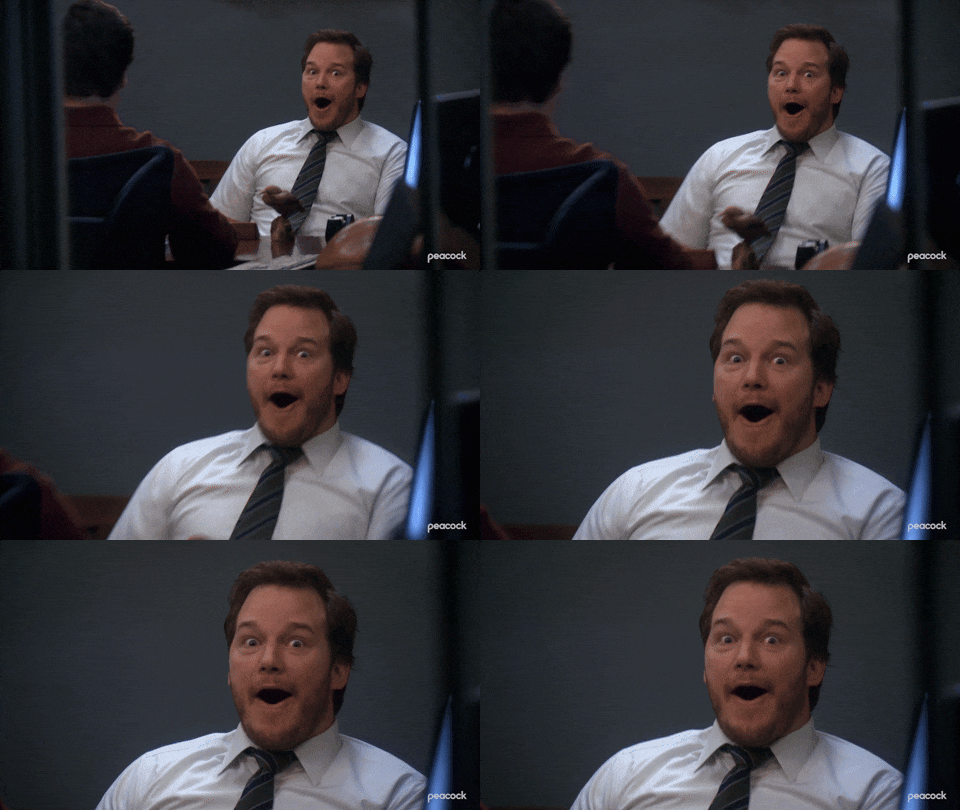
But in this industry, "misremembering" is expensive.
|
 |
|
|
|
Usually, this moment ends in one of two ways:
- The Fight: You stand your ground, relying on your memory, and the "trust account" with the client gets drained.
- The Fix: You eat the cost of the change order just to keep the peace, and your margin takes the hit.
And sometimes it’s even simpler than that: we talked about it… but we never officially decided it.
What if there's a third option?
Imagine that same moment. The client says, "I thought we agreed on the other side."
Instead of panicking or defending yourself, you pull out your phone.
You search "Prep Sink" in your meeting recap. You find the moment from three weeks ago. Timestamp 12:15: You explaining the plumbing stack issue. Timestamp 12:18: Client saying, "Oh right, that makes sense. Let's keep it on the left."
You show them. They remember. The tension vanishes. |
|
|
|
|
|
You didn't have to be "right."
You just had to have the receipts (well... the recording).
This is why I added the "Crisis Response Toolkit" to my AI Note-Taking Guide.
It includes the exact "He-Said-She-Said" Defense script—a way to present this proof to a client that feels helpful, not defensive. Part of a conversation, not a confrontation.
It protects your margin, but more importantly, it protects the relationship.
We spend so much time designing the space. We deserve a system that protects the design.
|
| Get the Guide + The Crisis Toolkit |
|
|
|
|
|
Here’s to never eating the cost of a "misremembered" change order again. 🥂
xo,
|
 |
|
P.S. The guide also covers the "Lost Inventory" search—for when the installer swears the light rail isn't in the garage (even though you know exactly which box it's in). |
|
|
Latest from the 'Gram... |
 |
 |
|
|
|
|
|
FieryFX.com |
|
|